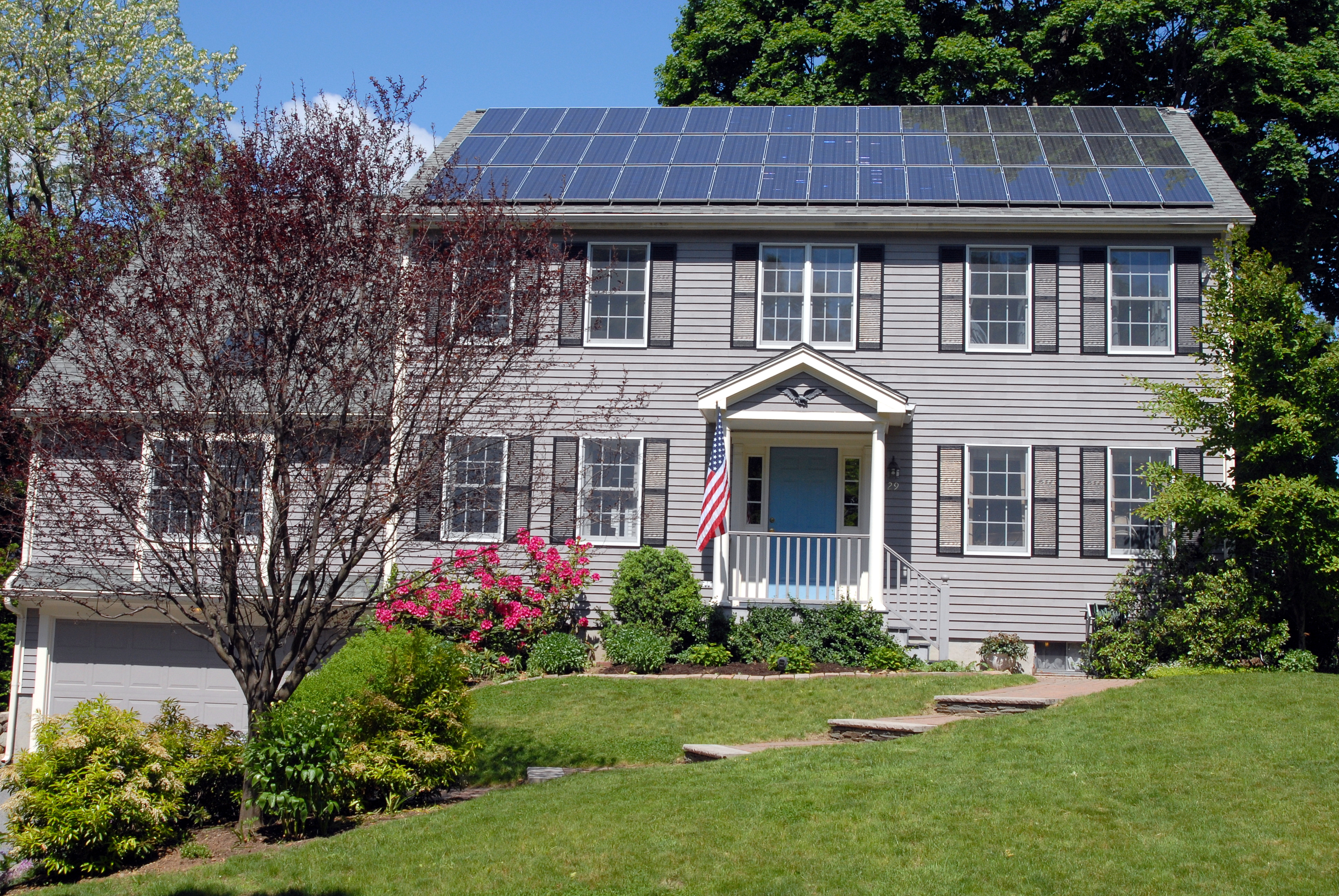
A summer cottage used between May and September sits in an interesting position relative to solar energy. The months of highest irradiation in Poland coincide almost exactly with the occupancy window. That alignment makes photovoltaic systems particularly effective for letniskowy — but sizing them correctly for seasonal use rather than year-round residential demand involves different assumptions than most installers apply by default.
Solar Irradiation in Poland: The Numbers That Matter
Poland's annual global horizontal irradiation (GHI) ranges from approximately 1,000 kWh/m² in the northeast (Podlaskie, Warmia-Mazury) to 1,100–1,150 kWh/m² in the southwest (Dolnośląskie, Opolskie). For the May–September window specifically, irradiation is concentrated: those five months account for roughly 65–70% of the annual total.
For sizing purposes, the relevant figure is peak sun hours (PSH) during the occupancy period. In central Poland (Mazowieckie, Łódzkie voivodeships), average PSH in June reaches 5.5–6.0 hours/day. May and September average 4.5–5.0 PSH/day. Using a conservative 4.8 PSH/day as the design month gives a reasonable basis for sizing a system that covers needs through the full season without significant oversizing for summer peaks.
Load Assessment: What a Seasonal Cottage Actually Consumes
The biggest mistake in PV sizing for letniskowy is applying household consumption figures derived from year-round urban apartments. A seasonal cottage's load profile is typically much lower and concentrated in evenings (lighting, device charging) with daytime loads from a refrigerator and water pump.
A realistic baseline for a 4-person summer cottage with LED lighting, a 150-litre refrigerator, a 250W water pump, device charging, and no electric heating or cooking:
- Refrigerator (A+++ 150L): ~0.4 kWh/day
- LED lighting (8 fixtures, 4h/day): ~0.24 kWh/day
- Water pump (30 min/day at 250W): ~0.13 kWh/day
- Device charging (4 phones + laptop): ~0.25 kWh/day
- Miscellaneous (radio, small appliances): ~0.15 kWh/day
Total: approximately 1.2 kWh/day. With a safety margin of 25% for cloudy days and system losses: 1.5 kWh/day design load.
Off-Grid vs Grid-Connected: The Choice for Letniskowy
For plots with existing grid connection, a grid-tied (on-grid) system is simpler and cheaper to install. Excess generation feeds back to the grid under Poland's net-metering (net-billing) framework, which changed significantly in April 2022 under the amendment to the Ustawa o odnawialnych źródłach energii.
Under the current net-billing rules (obowiązujące od 1 kwietnia 2022), energy fed to the grid is credited at the day-ahead market price at the time of export, not at 1:1 exchange. For seasonal cottages, this means surplus generated while the cottage is unoccupied in winter is credited at market rates — typically 300–600 PLN/MWh in 2025–2026, which may not fully offset the cost of consumption on return in spring.
For plots without grid connection — and many Polish letniskowy plots in areas zoned as agricultural or recreational have no grid access — a standalone off-grid system is the only option. These require battery storage to cover nighttime loads.
System Sizing: An Off-Grid Example
Using the 1.5 kWh/day design load and a 4.8 PSH/day design condition:
Required panel output: 1.5 kWh ÷ 4.8 h ÷ 0.80 (system efficiency) = 390 Wp of panels. In practice, a 2 × 250 Wp system (500 Wp) covers this comfortably, with headroom for a cloudy sequence.
Battery storage sizing: to cover 2 days of autonomy without sun at 1.5 kWh/day, with 80% depth of discharge (DoD) on lithium iron phosphate cells: 1.5 × 2 ÷ 0.80 = 3.75 kWh usable capacity. A standard 5 kWh LiFePO4 battery module covers this with margin.
Component costs (Poland, Q1 2026):
- 2 × 250 Wp monocrystalline panels: 800–1,200 PLN
- MPPT charge controller (20A, 12/24V): 400–700 PLN
- 5 kWh LiFePO4 battery pack (e.g. Pylontech US5000): 4,500–6,000 PLN
- 1,000W pure sine wave inverter: 800–1,400 PLN
- Wiring, fusing, mounting hardware: 600–1,000 PLN
- Installation labour: 1,500–2,500 PLN
Total for a complete off-grid system: approximately 8,600–12,800 PLN. Payback against generator operation (accounting for fuel and maintenance): typically 5–8 years.
Practical Installation Considerations
Roof orientation for letniskowy in Poland: south-facing at 30–35° tilt delivers the highest annual yield. East-west split arrays (two smaller arrays at ±45° from south) are increasingly common where roof geometry doesn't allow south orientation — yield loss is approximately 10–15% compared to optimal south-facing.
Panel mounting on timber-framed cottage roofs: penetrating mounts must be flashed properly; membrane roofs require ballasted mounting frames rather than penetrating anchors. For green roofs with PV, the panels provide additional shading that can reduce summer moisture stress on sedum — a documented co-benefit in German and Dutch research.
Seasonal disconnection: off-grid systems left unattended over winter should have battery protection set to 20% minimum SoC to prevent deep discharge damage. LiFePO4 chemistry is tolerant of winter temperatures down to -20°C when not being charged; the BMS typically handles protection automatically.
References
Net-billing regulations: URE — Energy Regulatory Office of Poland. Irradiation data: PVGIS — European Commission Joint Research Centre. Battery specifications: manufacturer datasheets; IEC 62619 standard for secondary lithium cells.

